
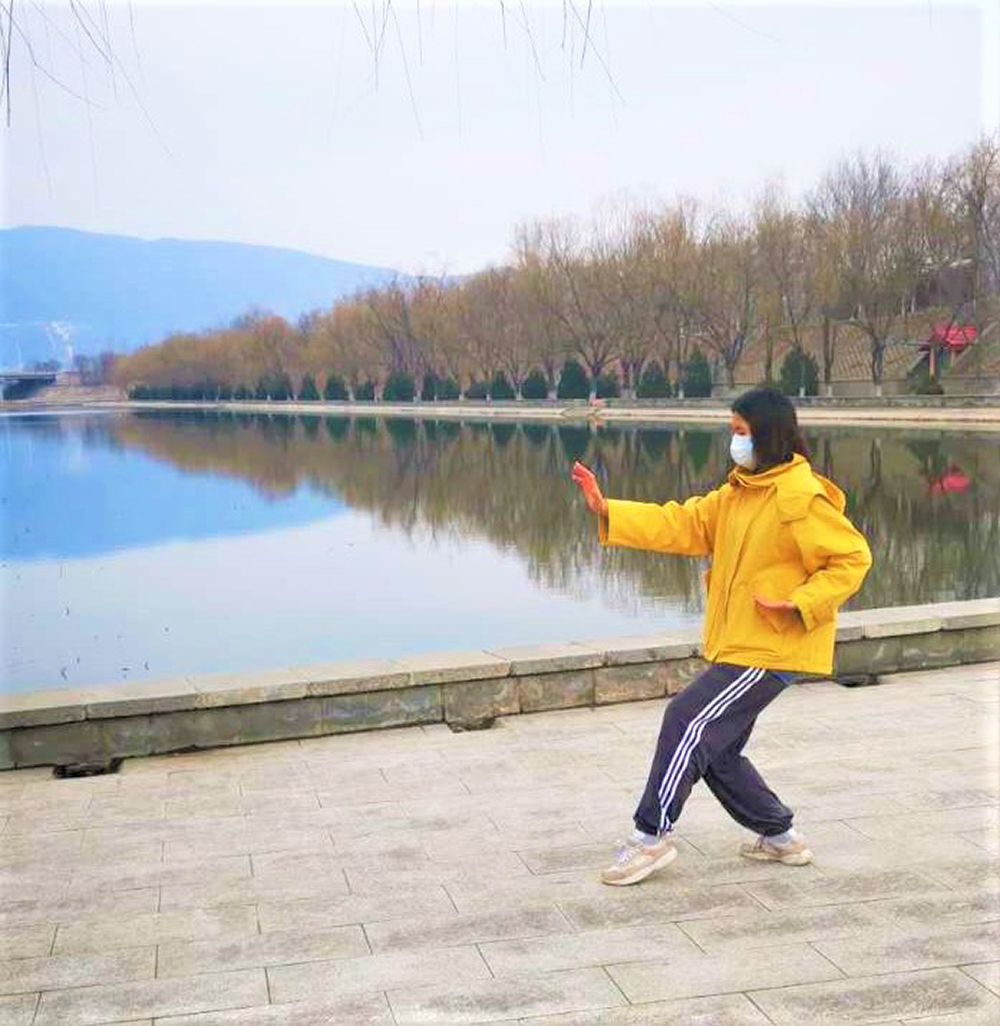
The COVID-19 epidemic took China by surprise. The first few weeks were at best uneasy for most because of the many unknown qualities of this new disease. As of March 10th, things are starting to get back to normal, here in Beijing at least.
Life in Beijing and China – 2020’s New Challenges
COVID-19 first appeared December 30, 2019 in Wuhan China. Not many took notice of it until authorities figured out the spread rate and fatalities were a lot higher than the SARS 2003-2004 epidemic. Since 2004 no known cases of SARS has been reported.
On January 23rd, I left Beijing for a second trip to Hong Kong but at that point, most people weren’t too alarmed about the new disease yet. Wuhan had already been locked down and the train stopped there, although nobody got on, of course. I was a bit annoyed because the young man next to me coughed every five seconds or so for most of the five-hour high-speed train ride to Shenzhen, the rail stop just before Hong Kong. Practically nobody was wearing face masks back then. Luckily, I didn’t seem to catch whatever it was he had.
A week later I was back in Beijing and the week after that wrote the following:
“On Wednesday February 5, 2019 a snow storm started in Beijing which continued through to Thursday morning.
The dawn of February 6th in Beijing saw history’s greatest economic engine apparently ground to a halt. The most dynamic world capital in all of human history was totally silent. The COVID-19 epidemic has raged around the country for more than a month and schools, factories, entertainment and sports facilities, practically everything was shut and locked except essential services like hospitals, grocery stores, the subways, and so on. No funerals are permitted for the growing number of victims of COVID-19, instead they were quickly cremated. Villages, towns, suburbs, and apartment complexes are walled and fenced with security checkpoints at what few entrances there were making travel difficult, and then the blizzard hit.
On Thursday morning February 6th, 2019, a strange and eerie silence enshrouded Beijing. Snow storms like that in early February are quite normal in Beijing, but this year everything was different. In spite of all that, at 9:00 am Beijing’s Walmarts opened, along with thousands of other stores, KFC opened soon after, and life more or less returned to normal, except practically everyone was wearing paper filter face masks. True, the lines at Walmart were long with people’s shopping carts filled to the brim and above not necessarily because of hoarding, but rather people just wanted to minimize the number of times they had to go grocery shopping.”
During that time, for whatever reason, Walmart had a supply problem with fruits and vegetables. It could be the combo of the Chinese New Year holiday, plus the storm, plus COVID-19 was the cause, but fortunately all the regular local markets always had plenty of fresh produce. Why do I sometimes go to Walmart? Ha! They have three different kinds of whole wheat bread, fresh milk, cheerios, Nescafe instant coffee, imported cheese and other things most stores don’t have.
Life lingered on with more than a little uncertainty. The spread rate of COVID-19 greatly exceeded the SARS epidemic as did the death rate. Fortunately, the government here took a lot of proactive measures. For example, they made all medical treatment and medicine free, built a large number of new hospitals within weeks, set up local tent clinics every few blocks, instituted quarantines all over the place, and so on. All kinds of new regulations were put in place. For example, entering any apartment complex, store, etc. one had to submit to a temperature test using an infrared thermometer, sometimes called a temperature gun. How did they come up with a million infrared thermometers so quickly? I don’t exactly know but many factories retooled overnight and started producing essential goods to fight the COVID-19 epidemic. A few days later I had to take my passport to the apartment complex office to get a pass to get in and out of my apartment area. Like many it’s got relatively high security with two checkpoints from the street to my apartment. That’s cool with me.

During most of this time I have felt fine, but there were some inconveniences. Every time I ride my bike places I usually ride I find they have been fenced or walled off. That’s okay too. Local communities want to be safe and I can understand that. Mostly COVID-19 kills older men so I think any measures to protect grandpa are justified.
Here’s another page from my journal:
March 8, 2020, Beijing - The sun still rises and sets as normal; the moon is waxing and nearly full. The rhythms of nature and ordinary life continues for the most part for most people just like normal. Most people wake up and eat breakfast, usually something like DouJiang (slightly sweet soybean milk), maybe Baozi (steamed bun filled with meat and/or vegetable), and/or BaBaoZhou, (“Eight Treasure" porridge) while others might like RouJiaMo (a uniquely delicious meat sandwich). And then most people go to work. And yet we all know, a killer stalks the land and everyone must take care and cooperate to combat it. Here in Beijing, most of the schools are still closed and children are taken care of by grandparents or in small informal mostly family-based daycares.
Before going outside the house, everyone dutifully dons a filter mask. It’s not just a self-defense action as it is also a serious social responsibility. Is this a “hysterical response” as some American media reports? No. It’s simple prudence. Naturally nobody wants to die and everyone here in China wants to protect their families and nation. The simple but clear and logical rational is this: Stop the spread of this disease as quickly and completely as possible to save human lives and give scientists time to develop a vaccine.
This killer - COVID-19 - is unique because it targets mostly older men specifically – in most cases grandpa - much more than other groups but stopping this disease protects everyone. Children are much less likely to get this disease but some do. Are a few proactive measures a “hysterical” response? Most people with a moral conscience would think any less of a response would be inhumane.
Yesterday, Saturday March 7th I went to the park near my house. It was a beautiful sunny, clear, relatively warm early spring day. There were lots of people there, mostly families with children strolling the pathways between and around the small lakes. Everyone wore masks of course, but people appeared happy and to be fully enjoying the lovely day. About half of the children had little bicycles, roller skates or scooters. It was so beautiful to see everyone having a great time.
As of March 6th, 2020, there are 100,776 Coronavirus cases with 3,412 deaths and 55,997 recovered worldwide. Some 80% of those infections and 3,090 deaths were in China. Whereas China has generally contained and greatly slowed the spread of this disease, other nations are not taking it seriously and the infection and death rates are likely to increase worldwide rapidly.
As of March 10th, the papers are announcing that the rapid spread of this disease has been pretty much halted in China. There are few new reported cases in China.
The following are some of the daily reports from Global Times, which is one of two Chinese “mainstream” newspapers in English.
1:26 pm Mar 10
The recovery rate from COVID-19 exceeded 93% in Shanghai, with four more coronavirus patients discharged from the hospital on Tue. So far, 319 of 342 confirmed cases in the city have been discharged upon recovery with three reported deaths.
12:47 pm Mar 10
People from low-risk regions in Central China's Hubei Province can travel within the province with a "green code" that records their health status. The province is cautiously restarting some businesses amid easing epidemic control measures.
12:52 pm Mar 10
Red Cross Society of China is considering dispatching a medical team to Italy amid the COVID-19 outbreak, and the two sides have communicated about this, Red Cross Society of China's director Chen Zhu told the Global Times Tuesday.
12:50 pm Mar 10
The Red Cross Society of China on Tuesday held a video conference with Chinese experts dispatched to Iran to fight COVID-19. Chinese experts in Iran reported the shortage of medical supplies, including protection outfits and test kits.

I also read that 15 Chinese provinces have less than 10 COVID-19 cases, travel restrictions are being lifted in some areas, and 80% of business are open and running again.
Some schools are open, but those students are still under quarantine conditions which means they can only go to school and home. Nothing else is permitted. Most school buildings are still closed, but it appears most students around China are taking their classes online.
China is wired-up to the max. Just about everyone has smart phones and the tech here is freaky amazing. Nobody has needed cash for years now. Even at Walmart, you can check out your own groceries and pay with Alipay, WeChat pay or any of a dozen other payment methods. So, taking classes with group chats is easy for everyone as is transferring docs, videos, etc.
There are many spin-offs on this COVID-19 disease.
 Online learning and work have become normalized. Traffic jams have just about disappeared. Just recently, I went downtown to get a fan replaced on my notebook computer and some photos to go with this story. Driving was so easy! True, the Forbidden City, museums and sports centers are still closed. And, at the small mall I went to there, were ID and temperature checks at the door. I had to sign in, scan a QR code with my phone, and spray my hands with a disinfectant. Some people might find that annoying but it’s vastly preferable to dying of some hideous disease.
Is everyone wearing a mask? Probably 99%, yes. One of the strangest things is that the only people I see not wearing masks are older men. Why? They are in the highest risk group. I chatted briefly with one a couple of days ago in the park. During his long life he’s survived everything and didn’t believe this was any different. Oh well. I tried to tell him this was different, but… my Chinese wasn’t good enough, I guess. On below-zero windy days I’ve seen old guys here strutting around wearing shorts and open sleeveless shirts appearing to be perfectly comfortable. They also go swimming in lakes that are mostly frozen over all winter long. I don’t know how they do it.
How have I felt? Pretty good but any small symptom can be cause for a bit of anxiety. A couple of weeks ago, I had migraine headaches for almost continuous 10 days. That was unprecedented for me. I never get headaches. Eight percent of people with COVID-19 have bad headaches. But I’ve had no fever or cough. So, who knows what that was? The only thing that helped was training with heavy and light bags, jogging and biking for at least an hour and a half every other day. Those activities made it go away for a few hours at least, sometimes all night. I’ve had no headaches the last four days or so.
The other night, I left the living room window open as I often do. I woke up at 3:30 am after two hours of sleep with an incessant cough. Maybe it was because I skipped dinner. I shouldn’t do that, but sometimes do. Oh no! So, I closed the window, ate some oatmeal, drank a huge amount of water and slept like a baby till 9:00 am, which I never do. Usually I wake between 5:00 and 6:30 at the latest. Anyways, by about noon the cough was gone. Good ol’ T-cells to the rescue, I guess. COVID-19 isn’t the only villainous virus running around.

The following day in the afternoon, I went downtown and it was all good.
It seems the worst of this disease in China may be over. On the “bleak” side, I worry a lot about other countries. China now has a 15-day mandatory quarantine on all visitors to China. Why? Mutated versions of this disease have been found in many other countries. They don’t want mutated versions coming into China. Though in this short report I make it appear things are going well, this COVID-19 is no joke and its far from over. It appears to combine SARS with HIV properties. Some people who get it can’t produce the antibodies and T-cells to fight this disease. Several studies have confirmed this.
“Also, research showing “abnormalities in chest computed tomography (CT) images were found in 100% of the patients. Grinding glass‐like and consolidation areas were found in 98% of the infected patients’ bilateral lungs.”
It appears the lungs of terminal patients usually fill with fluid. Add “grinding glass-like” abnormalities and people should take this disease very seriously indeed. Mechanical ventilation, suction, and painkillers combined with medication helps sometimes. Sometimes they don’t. Taking proactive measures to prevent the spread of this disease isn’t just a good idea - it’s essential.
Another little datum concerning this disease. Usually viruses can’t survive outside the body suspended in liquids, like cough, and sneeze particles for more than a meter or so as those liquid particles fall to the ground. But COVID-19 can remain suspended in the air for much longer times and survive and travel for several meters in the air in microdroplet aerosol form from simple breathing. This has led to many “super-spreader” events on airplanes, boats, classrooms and even open markets.
Transmission of this virus is all too easy. The incubation period (time between being infected and showing symptoms) is usually only 3-4 days, but in some cases up to 24 days. That fact alone greatly accelerated the spread of this disease. COVID-19 is unique. “I feel great! I don’t need a mask!” Wrong. A person can feel great for three weeks while giving it to hundreds of other people.
COVID-19 also can attack the heart, kidneys, and testis. This is nothing to ignore or play games. People with hypertension and diabetes are also especially vulnerable.
Antibodies and T-Cells are the body’s warriors. Antibodies (immunoglobulins) identify invaders (antigens) like viruses and bacteria and then assassin-like T-cells kill them off. But this system doesn’t function in about 2% of people who get this disease due to its immunosuppressive qualities. Yes, for most it’s just a mild flu and in some cases people have no symptoms at all and still pass it to other people. For some people, COVID-19 is a death sentence even when getting the best medical treatment in the world.

In China, the combined efforts of authorities and the uniform disciplined precautions taken by almost everyone here has at least cornered this disease while researchers hopefully develop effective vaccines in the near future. In the meantime, I hope people in other countries learn from this experience and take rigorous proactive measures to make sure it doesn’t spread out of control before vaccines are developed.
As for me I’ll keep wearing a mask outside the house, avoid touching surfaces outside my home, wash my hands as soon as I come inside, keep up my Kung Fu training, running and biking, and close my windows at night. Naturally I always eat a lot of fresh fruit and vegetables. In addition, I pray, not so much for myself, but rather for those who live in countries where authorities are not taking this disease seriously enough and especially for those that don’t have even basic medical insurance.
Keeping a positive mental attitude, having appreciation for the good things we have, meditation and getting enough rest are also basic prerequisites for health under any circumstances in my opinion.
“Confucius treats anxiety, yu, and fear, chu, as internal feelings, but he also turns them toward an internal standard of right and wrong. The issue then is not what one fears as a source of anxiety out in the world, but the degree to which the individual has created the source of fear and anxiety in themselves by how they have constructed the world they inhabit.”
Confucius and the Age of Anxiety. Rodney L. Taylor, Ph.D. HuffPost
To see what is right and not to do it is to lack courage.” (2.24)
“The wise are not confused; the ren are not anxious; the courageous are not afraid.” (9.29)
“The man of ren is inevitably courageous.” (14.4)
“The person who has developed his social personality so strongly as to be ren – who is capable of feeling the interests of others and of society as intimately as he feels his own – will appear courageous because he sees the value of his own life in terms of his service to the world of good people.”
Confucius and the Origins of Confucianism. Indiana University, History G380 – class text readings – Spring 2010 – R. Eno
Professor Bob Eno has an excellent internet site with links to some of China’s great classics
When can the Silk Road Kung Fu Friendship Tour traveler get back on the road? I don’t know. Hopefully within a month or two. Luckily all visas for travelers here in China have been extended for at least a couple of months.
Lastly, I want to express appreciation to the Chinese authorities for taking COVID-19 very seriously, and the good citizens who really do work together as one to fight this new disease.
Note: For the latest information on the clinical course and risk factors for mortality of adult inpatients with COVID-19 in Wuhan, China (March 9, 2020) see The Lancet.


